How to play multiple characters in a single play or film
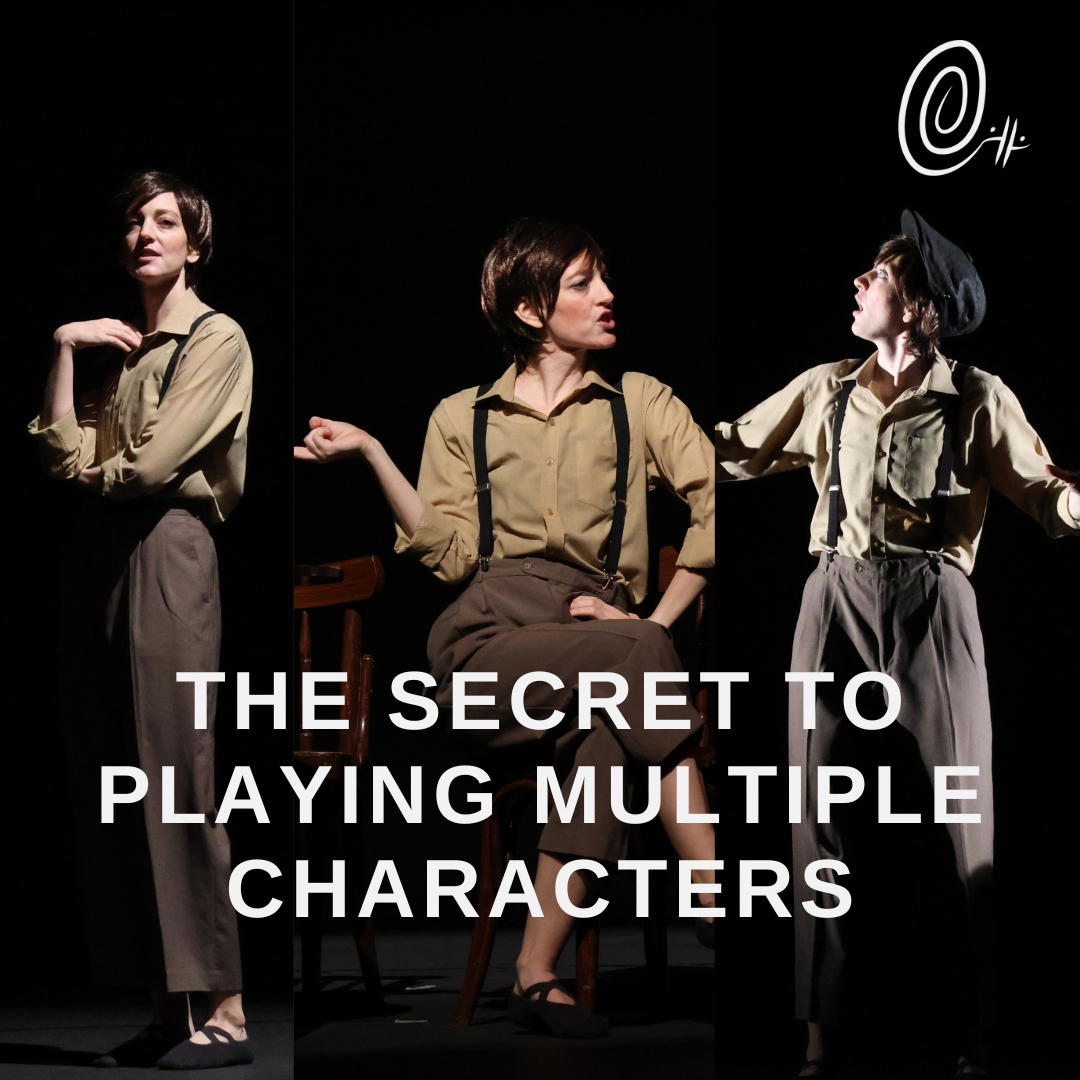
Most of the time as an actor, you play one character only. But there are many projects where you get to play multiple characters. Lots of theatre plays even build it into the script, such as Marcus van Mayenburg’s popular satire “The Ugly One.” Some creative films, like Cloud Atlas, also showcased actors as multiple characters. One person plays such as my own Searching for Pierrot require it to make the story come to life. And even if you aren’t playing multiple characters in one project, it’s important to know how to differentiate them – otherwise you can end doing what many actors (even famous ones) do, which is playing themselves in each project with different clothes.
Differentiating characters isn’t just about putting on accents. It involves the whole system: gestures, body language, and vocal quality. Let’s take a look!
Note: For illustration purposes, I’m using some of the characters I play in Searching for Pierrot.
“Base” gestures and gestural language
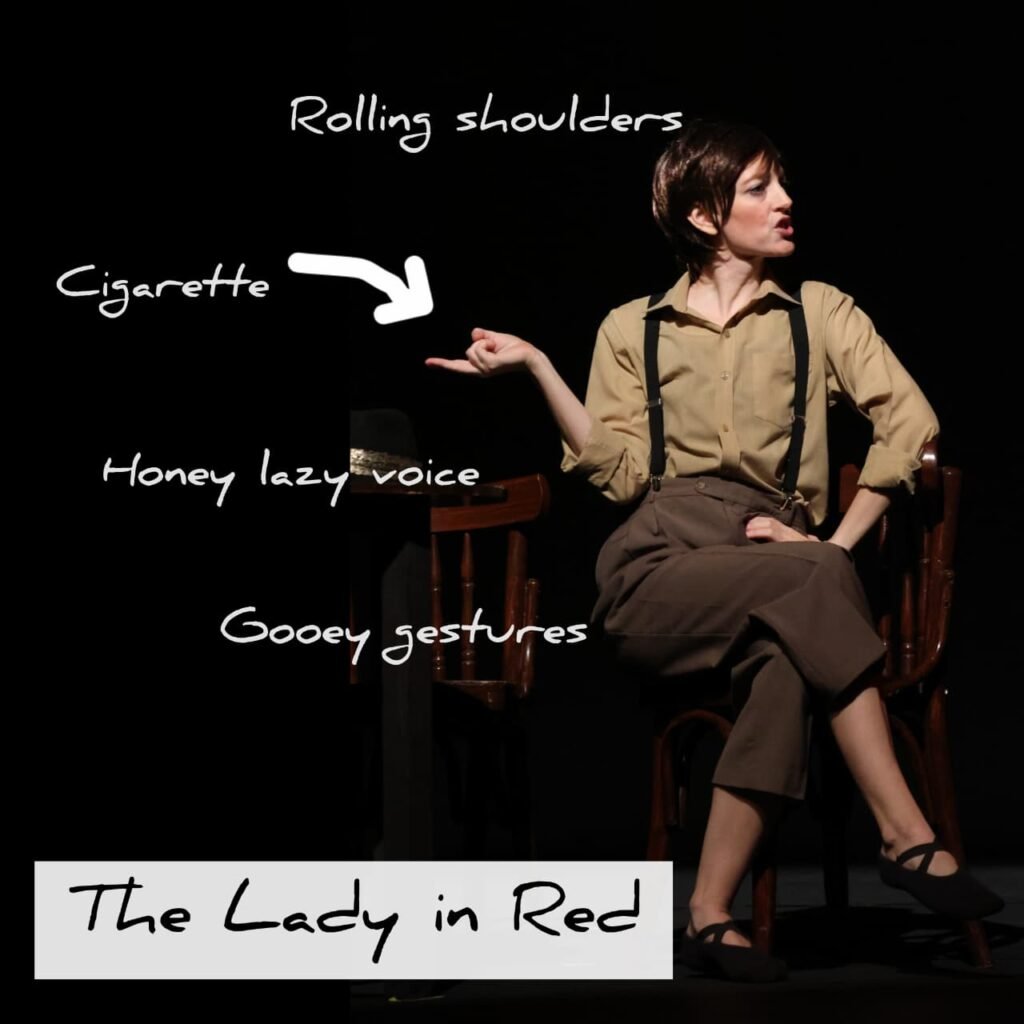
When a person is listening or talking to someone, even if they use their hands, they tend to return to the same position. It could be holding their hands together in front of their stomach, or crossing their arms, or arms behind the back. This is what I call a “base” position and it’s slightly different for everyone. Watch people talking to each other, and see what kinds of base gestures you can see.
People also have different gestural languages. Some people use a lot of space with their gestures; others only use one hand. Some cultures have certain gestures that tend to repeat.
The thing about your own gestures is that it’s really hard to change them – especially when acting or emoting. I noticed when watching myself in the Pakistan feature film “Poppay ki Wedding,” I noticed that when my character gets angry, she uses my gestures. Dang! Since then, I’ve worked really hard to adjust my gestures for each character I play.
When you play multiple characters, give each one a different base gesture, and different ‘signature’ gestures. It helps the audience unconsciously understand the shift, especially if you don’t have a costume change.
Voices: Subtle but realistic changes
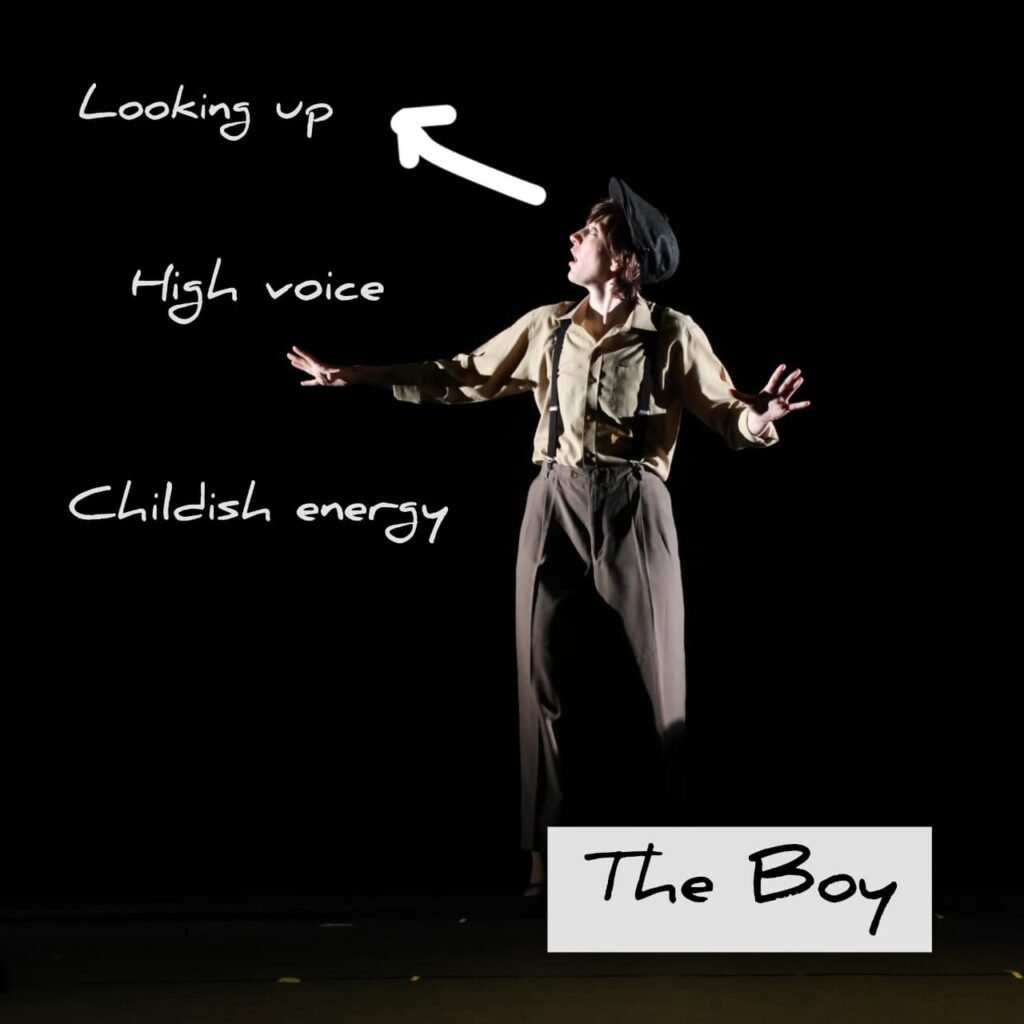
When people think of voices, they think of funny voices like nerd, robot, cute, shy, etc. But vocal range can be much more subtle – and more effective. We have a lot more range in our voices than we think – and learning to change the pitch and texture can give us a lot of options, even beyond accents and other obvious choices.
I don’t do accents very well – the best one I can do is French, because I’ve spent a lot of time with French people and speak the language. But I struggle with others, and so I need other options to change my voice. I use volume and pitch mostly, but texture as well. By texture, I mean the way words are formed – slowly, clearly, mumbling, etc.
Doing exercises like vocal sliders (pitch and volume) and projection exercises to move the voice from nose to throat to belly can help you understand your range and find different options for each character.
Physicality: “How” a character moves
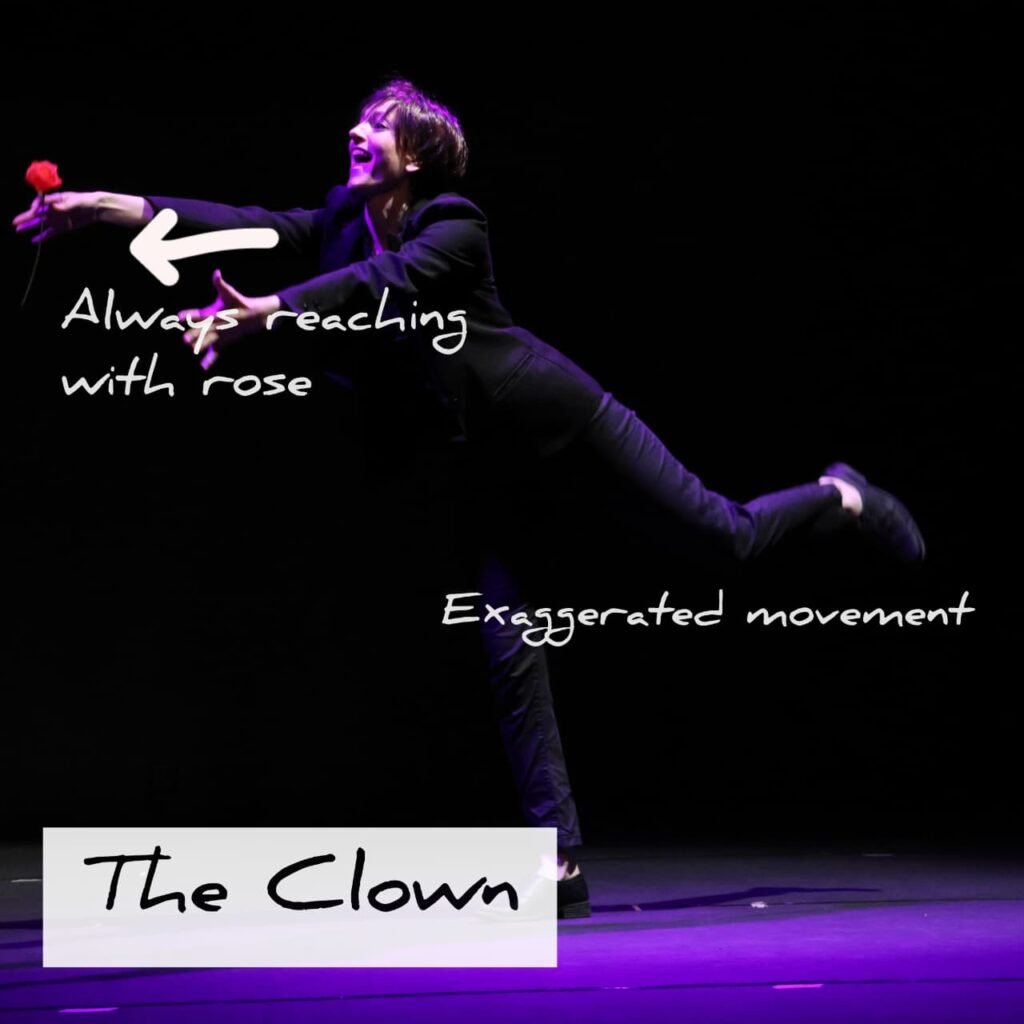
Some people walk with a bounce, fidget constantly, and have an energy that constantly tries to find its way out of their body. Others have a slow, almost lazy or languid way of moving. They all say very different things about the type of person that character is. When playing multiple characters, it’s important to distinguish each one’s physicality. Experiment with dynamics, different walks.
If you struggle to come up with ideas, one interesting exercise is to try and recreate the physicality of different animals. The first step is to try to recreate entirely (such as literally crawling). From there, try to slow return to human movement, but retaining the ‘core’ of that animal’s physicality. For example, if you started as a cat, maybe you keep the walk of one foot directly in front of the other, or the kind of lazy, fluid way of moving.
A grab bag of tools: props, directions, costume pieces
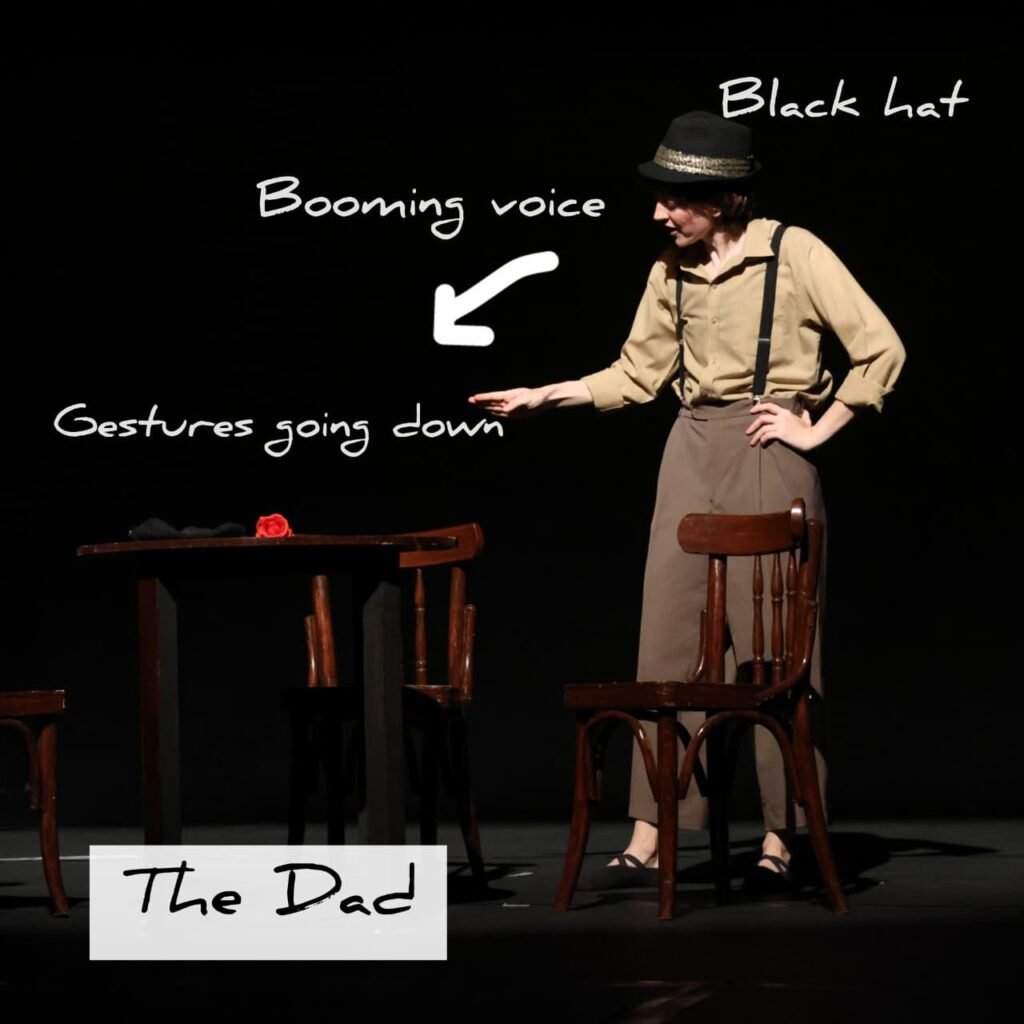
Gestures, voice, and physicality are all great ways to differentiate characters. But they can be difficult, and not all audiences are paying that close attention. So, we can help them understand with things like small props and add ons. In some cases, actors might have a full costume change, and the costume does the heavy lifting in showing the new character. However, a well chosen scarf, hat, or other add on can make a big difference as well.
Another tool I use in Searching for Pierrot is sightlines – the main character is a child, and so he is always looking up. When other characters talk to him, they look down. The height difference can immediately tell the audience if the boy is speaking or someone else. I also use light – the lady in red, for example, always appears with a red light. The Monster always appears with a green light (except the part when it’s a fake, to subconsciously reinforce the storyline), and the sad clown with pink.
Of course, all of these together make an embarrassment of choices, and it can be hard to remember all the various gestures, physicality, etc, especially if you have to play more than two characters. So how do you pick?
A few key choices are better than many confusing ones
One thing I’ve learned with acting multiple characters is that it’s easy to get lost. Rather than trying to create multiple fully formed, complex humans with complete gestural languages, walks, vocal habits, etc, I choose a few key elements and focus on those. For example: I can never remember to change my walk, or transform enormously the types of hand gestures I do. Instead, I focus on distinct base gestures and assign each character a voice and a physicality type. In Searching for Pierrot, I show those base gestures whenever the character is introduced. If that character has a prop, I’ll wear or have it with me when they’re introduced.
Although Searching for Pierrot has at least 7-10 different characters, I’ve always received the feedback that they’re all very distinct, and audiences are never confused about who is speaking when. I hope this guide gives you something to get started – and let me finish by saying, that while it’s tempting to just change a costume and let the visuals do the work, really doing the work to change the voice and physicality can make a huge difference in your acting performance.
Good luck!