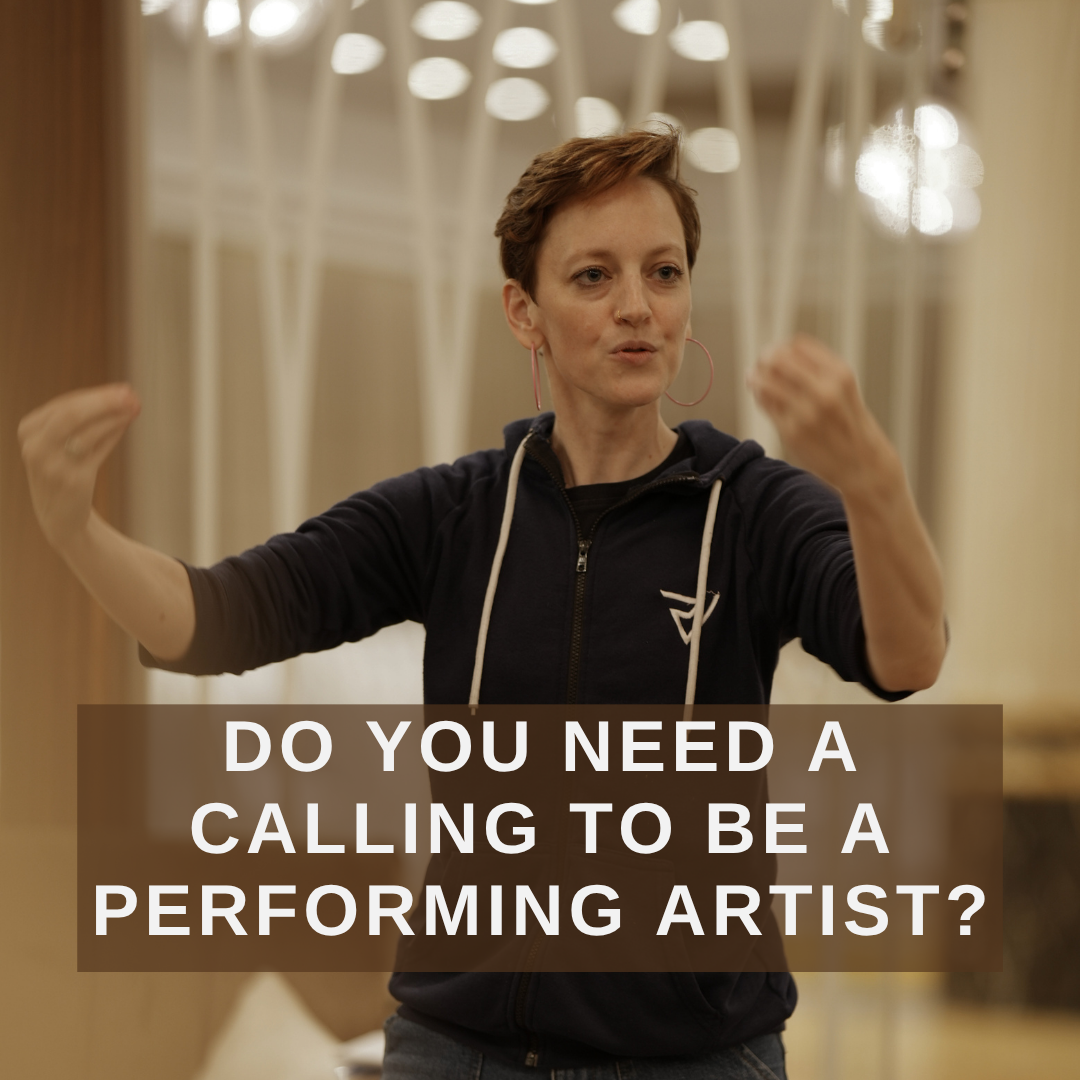
Do you need to have a calling to be a performing artist?
Once, in a ballet class in Paris, the teacher said, “If you feel like you have a choice, don’t do it.” He was talking about pursuing dance as a profession. It was a harsh thing to say, especially for a millennial generation that has always been told you can be anything you want!
The thing is, I knew what he meant. He was putting words to something I’ve almost always felt. The question has never been if I will perform/work in the performing arts, it has only been how. In my late teens there were some moments when I questioned if I could and therefore if I should. The middle of my sophomore year in university was the last time I remember seriously asking myself that question.
Yet it was beyond just the decision to do and not try (thank you Yoda). It was a feeling of inevitability, that no matter what I did, I would return to the same place of dance, movement, and performance. There was no other way – there was no choice. Full speed ahead.
That’s what it’s like to have a calling. But do you really need it to be a performing artist?
Economics, Passion, and Making it Work
It’s complicated. Performing arts covers music, dance, and acting, but it gets mixed up with recorded and visual media. Film, for example, is a blend of visual art and performance. Music can also be recorded rather than performed. There are huge ranges of types of work in each of these fields. There are performing roles and technical roles, design roles and supporting roles.
If you only look at performing roles, it’s a tough industry. Unless you are one of the tiny percentage lucky enough to be famous from films, it’s not easy to get into, and seemingly hard to find those ‘good jobs’ with salary, benefits, etc. The ‘mainstream’ routes, such as working with a dance or theatre company, are available to an elite few that have the right training, luck, and timing to be in the right room at the right time.
And there are some people who don’t make it. Who try, but aren’t lucky enough to be in that room at the right time. Some who lack education. Some lack skill. Either way – it’s a small industry, and depending on who you’re talking to, it’s either too competitive, too many people for too few jobs, or it’s not valued enough for people to want to do it.
Is a calling necessary to make it as a performing artist? Is it some kind of magic tell that says if a person will be successful or not? Can a person stumble into performing arts and still make it?
There’s no gold ticket to success, because ‘success’ doesn’t exist
It doesn’t exist because it’s different for everyone. I don’t think there’s any right answer to these questions, because life is complicated, people want different things, and there are a thousand answers to that age-old questions “how shall we then live?” But here’s what I do know:
People who have callings self-select into the industry. It’s not easy, a lot of parents disagree with the idea, and chances of making good money are slim. Therefore, it’s more unlikely for a person to randomly fall into being an actor than it is for them to randomly fall into working in insurance. Because it is tough, people who feel called to it are more likely to stick out the ups and downs and make it work. And, they’re less likely to be motivated by financial reward, because the doing – the practice of doing what you feel called to do – is fulfilling enough.
That doesn’t mean that a person who has a calling is more likely to ‘be successful.’ A friend of mine from high school tried to ‘make it’ in Hollywood for years and never found the way, yet settled into a life that still revolves around performing, voice acting, and creative pursuits. He didn’t become an A-lister, but he’s doing what he was called to do.
A calling doesn’t guarantee anything. But it’s a feeling that can’t be shaken, and sometimes, that’s the hardest part.
The struggle to become who you need to be
When I first read Honeybees and Distant Thunder by Rika Ondu, I was absolutely enthralled – but what was more, I felt seen. It was like reading a description of what it was like to be me, just in music form. The second time I read it, it made me weep. It was a strange feeling, like a deep and profound recognition of reading exactly what it’s like to have a calling: the absolute joy and certainty of doing what it is you were born to do, and yet the struggle of always trying to follow it in a world that is so full of so many other things.
Knowing what you want/need to do is a beautiful and difficult thing. It doesn’t guarantee success as a performing artist. It’s not required to be successful either. And I think at the end of the day, both of those things are irrelevant. There are many performing artists who feel called to it. Some who are just along for the ride. Others feel called yet face insurmountable obstacles of whatever kind.
I’ll end by modifying what my ballet teacher said: “If you feel you have a choice, think twice about getting into it. But if you don’t feel like you have a choice, make your own success.”